
SanDisk Stock (SNDK): Price, Outlook and How to Buy

 Prefer us on Google


SanDisk — the NAND flash-memory company spun off from Western Digital in February 2025 — trades on Nasdaq under the ticker SNDK, listed independently since February 24, 2025. This page is the continuously-updated home for SNDK on WEEX: where to track the price, what drives the stock, and the practical routes to get exposure — including without a US brokerage account.
▶ Browse the stock futures markets on WEEX ・ SanDisk Stock Price Prediction 2026–2030: Can SNDK Reach $3,000?
SNDK price: where to track it
SNDK trades on Nasdaq during US market hours, and you can follow the live quote through any brokerage or market-data service that carries Nasdaq prices under the symbol NASDAQ: SNDK. The price has responded above all to two forces: the NAND flash shortage that has defined memory pricing in 2026, and AI datacenter demand for storage. On WEEX, SanDisk-linked exposure runs through the stock markets section — WEEX lists SNDKON, a tokenized stock designed to track SanDisk's share price; see the market listings for the SNDK-linked markets currently offered.
What is SanDisk, the business?
SanDisk's business is NAND flash memory — the storage technology at the center of 2026's supply shortage. The company returned to standalone life in February 2025, when Western Digital spun it off, and SNDK has traded on Nasdaq in its own right since February 24, 2025. Two forces define the 2026 story: tight NAND supply supporting prices across the industry, and AI datacenters buying storage at scale — a sustained tailwind rather than a one-day event. SanDisk pays no dividend, retaining its earnings instead. The next scheduled company events are the fiscal Q4/FY2026 results on August 5, 2026, followed by an Investor Day on August 13, 2026.
SanDisk stock outlook for 2026
Bull case
- NAND flash shortage supporting industry-wide pricing
- AI datacenter storage demand as a structural, recurring buyer
- Near-term catalysts: fiscal Q4/FY2026 results (August 5, 2026) and the Investor Day (August 13, 2026)
Risk factors
- Pullback and valuation-reset risk after the sharp 2026 rally
- Memory-cycle reversal — NAND pricing is cyclical, and shortages can unwind
- Event risk around earnings and guidance
For scenario analysis and price targets, see the dated coverage linked below — this page is kept continuously updated and does not carry point-in-time targets.
How to buy SanDisk stock (SNDK)
Route 1 — US brokerage access: buy SNDK directly on Nasdaq during US market hours through a brokerage that offers US equities.
Route 2 — on WEEX: WEEX lists SNDKON, a tokenized stock designed to track SanDisk's share price, within its stock markets line-up:
- Create a WEEX account and complete verification.
- Deposit USDT.
- Open the market listings and select an SNDK-linked market.
- Place your order.
A tokenized stock or futures position is not the stock itself: it is designed to track SNDK's price, and its market price can deviate from the underlying (tracking difference, liquidity, volatility). On futures markets, leverage amplifies losses as well as gains. Understand these risks before trading.
Which route fits you?
| Point of comparison | US brokerage (SNDK) | WEEX (SNDK-linked markets) |
|---|---|---|
| What you hold | SanDisk common stock | Token/position designed to track SNDK's price |
| Market types | Cash equity | Tokenized stock — see the listings for current market types |
| Account requirement | US-market brokerage account | WEEX account |
| Trading hours | US market hours | See the market page |
| Minimum size | Broker-dependent | See the market page |
| Shareholder rights | Yes | No — price exposure only |
What is a tokenized stock?
A tokenized stock is a blockchain-issued instrument whose price is designed to follow a listed share. On WEEX, the SanDisk-linked product is SNDKON, designed to track SanDisk's share price. Tokenized stocks suit price exposure, not share ownership: they typically carry no voting rights and no direct dividend receipt, and their market price can deviate from the underlying share. For SNDKON's current market types, specifications and trading hours, see the WEEX market listings.
Recent milestones
- February 2025 — spun off from Western Digital; independent Nasdaq trading since February 24, 2025
- 2026 — a sustained rally driven by the NAND flash shortage and AI datacenter demand, rather than any single-day event
- June 18, 2026 — 52-week high of US$2,191.69
- June 24, 2026 — the year-to-date gain stood at roughly +720%; by July 3, 2026 the gain since the spinoff exceeded 6,000%
- August 5, 2026 — fiscal Q4/FY2026 results (company announcement); August 13, 2026 — Investor Day
FAQ
Where is SanDisk (SNDK) listed?
On Nasdaq, under the ticker SNDK (often written NASDAQ: SNDK). SanDisk has traded independently since February 24, 2025, following its spinoff from Western Digital.
Why did SNDK rally in 2026?
The move has been a sustained one, driven by the NAND flash shortage and AI datacenter storage demand. The stock set a 52-week high of US$2,191.69 on June 18, 2026, and as of June 24, 2026 stood up roughly 720% for the year.
Does SanDisk pay a dividend?
No. SanDisk pays no dividend and retains its earnings.
When are SanDisk's next results?
Fiscal Q4/FY2026 results are set for August 5, 2026, followed by an Investor Day on August 13, 2026.
Is SNDKON real SanDisk stock?
No. SNDKON is a tokenized stock designed to track SNDK's price; it carries no shareholder rights and no direct dividend receipt.
When can I trade?
SNDK: US market hours (9:30–16:00 ET; 23:30–06:00 JST in winter, one hour earlier during US daylight saving). WEEX markets: see the market page for current hours.
Perpetual futures on U.S. stocks like this one trade on WEEX — see the futures market listing.
This content is for information only and is not investment advice.
Related coverage
This content is provided for general informational purposes only and doesn't constitute financial, investment, legal, or tax advice. Any events, rewards, online promotions, or related information mentioned herein should not be considered a recommendation, solicitation, or invitation to purchase, sell, trade, or otherwise deal in any crypto assets. Crypto assets are highly volatile and may result in loss. The availability of WEEX services, products, and related events may vary by region. You are responsible for ensuring that your participation is in accordance with applicable local laws and regulations.
You may also like
How to Switch Crypto Exchanges Safely: Withdrawal Checklist and Choosing Your Next Venue
Switching crypto exchanges is routine if you do it in the right order: close and redeem first, verify both sides, withdraw safely, then restart trading deliberately. A practical checklist — including what to do when your exchange is shutting down.

BitMart Alternatives: Where to Trade After the Shutdown
With BitMart ending all trading on August 26, 2026 — and new positions already blocked — its users need a new venue now. What to look for in a replacement exchange, and how to move across without a gap in your trading.
BitMart Is Closing: Shutdown Timeline and How to Withdraw Before August 26, 2026
BitMart announced an orderly wind-down on July 26, 2026: all trading ends August 26 at 01:00 UTC and the platform closes January 31, 2027. The full timeline, the recommended withdrawal deadlines, and how to move your funds out in good time.
Where Derivatives Traders Can Go After BitMEX
With BitMEX closing on September 23, 2026, its derivatives traders need a new venue. What to look for in a BitMEX alternative, and how to move your perpetual-futures trading across without a gap.

BitMEX Is Closing September 23, 2026: Timeline and How to Withdraw Before the Deadline
BitMEX shuts down on September 23, 2026. Here is the full timeline, including the August 26 force-close, and how to withdraw your funds before the deadline to avoid the monthly fee on anything left behind.
Unipeg uPEG and Uniswap v4: How Next-Generation NFTs Work
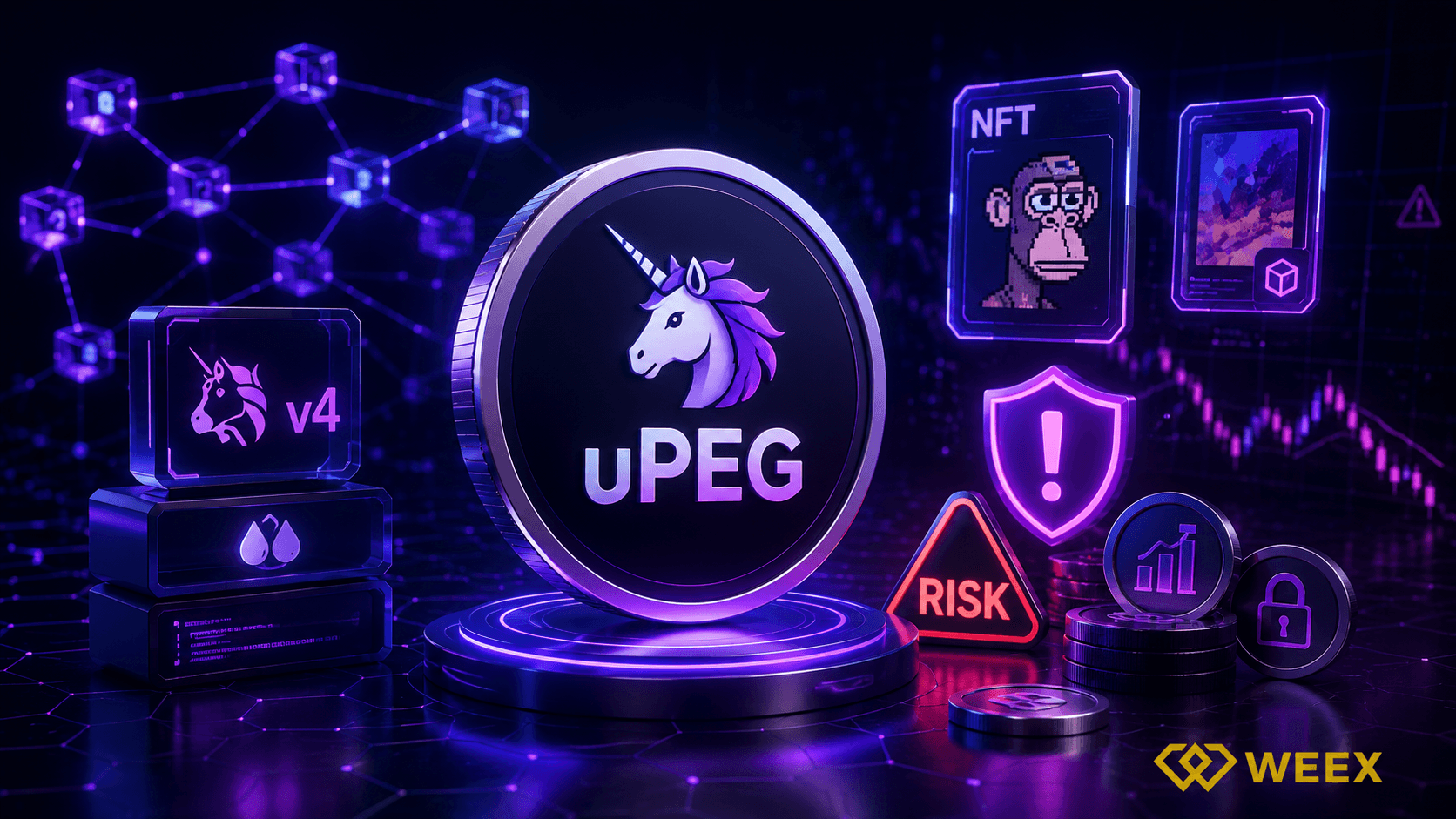
Unipeg uPEG is an experimental on-chain asset based on Uniswap v4 hooks. We break down how it works, how it differs from NFTs and ERC-404, what the risks are, and why interest in it is growing in 2026.
Can $ADA Hit $1 in 2030? $ADA Price Prediction

What is XRP (XRP) Coin? How XRP Works, Uses, and What Beginners Should Know

Movement Labs Files Chapter 11 Bankruptcy as Co-Founder Claims Top Unsecured Debt
What Are AI Agent Wallets in Crypto? How They Work, Risks, and Use Cases
SUI Price Prediction & Forecast July 2026

How to Choose a Crypto Trading App: What Matters for Security, Fees, and Features
How Pre-IPO Perpetuals Work: Index Pricing, Funding, and Risks
What Is OPENAIUSDT? WEEX's Pre-IPO OpenAI Perpetual Explained
ANTHROPICUSDT Explained: How WEEX's Anthropic Pre-IPO Perpetual Works and Its Risks
Hitachi Stock (6501): Price, Board Talking Points and Outlook
SoftBank Corp (telecom) Stock (9434): Price, Board Talking Points and Outlook

NEC Corp Stock (6701): Price, Board Talking Points and Outlook
SoftBank Group Stock (9984): Price, Board Talking Points and Outlook
Data Section Stock (3905): Price, Board Talking Points and Outlook
Sakura Internet Stock (3778): Price, Board Talking Points and Outlook
FRONTEO Stock (2158): Price, Board Talking Points and Outlook
Fujitsu Stock (6702): Price, Board Talking Points and Outlook
Oriental Land Stock (4661): Price, Board Talking Points and Outlook
Frutafruta Stock (2586): Price, Board Talking Points and Outlook
Unitika Stock (3103): Price, Board Talking Points and Outlook
Healios Stock (4593): Price, Board Talking Points and Outlook
Daiichi Sankyo Stock (4568): Price, Board Talking Points and Outlook
Sanrio Stock (8136): Price, Board Talking Points and Outlook
Nippon Steel Stock (5401): Price, Board Talking Points and Outlook
How to Switch Crypto Exchanges Safely: Withdrawal Checklist and Choosing Your Next Venue
Switching crypto exchanges is routine if you do it in the right order: close and redeem first, verify both sides, withdraw safely, then restart trading deliberately. A practical checklist — including what to do when your exchange is shutting down.
BitMart Alternatives: Where to Trade After the Shutdown
With BitMart ending all trading on August 26, 2026 — and new positions already blocked — its users need a new venue now. What to look for in a replacement exchange, and how to move across without a gap in your trading.
BitMart Is Closing: Shutdown Timeline and How to Withdraw Before August 26, 2026
BitMart announced an orderly wind-down on July 26, 2026: all trading ends August 26 at 01:00 UTC and the platform closes January 31, 2027. The full timeline, the recommended withdrawal deadlines, and how to move your funds out in good time.
Where Derivatives Traders Can Go After BitMEX
With BitMEX closing on September 23, 2026, its derivatives traders need a new venue. What to look for in a BitMEX alternative, and how to move your perpetual-futures trading across without a gap.
BitMEX Is Closing September 23, 2026: Timeline and How to Withdraw Before the Deadline
BitMEX shuts down on September 23, 2026. Here is the full timeline, including the August 26 force-close, and how to withdraw your funds before the deadline to avoid the monthly fee on anything left behind.
Unipeg uPEG and Uniswap v4: How Next-Generation NFTs Work
Unipeg uPEG is an experimental on-chain asset based on Uniswap v4 hooks. We break down how it works, how it differs from NFTs and ERC-404, what the risks are, and why interest in it is growing in 2026.

Contents
Latest articles







Latest coin listings on WEEX


