
What Is OPENAIUSDT? WEEX's Pre-IPO OpenAI Perpetual Explained

 Prefer us on Google


What is OPENAIUSDT?
OPENAIUSDT is a USDT-margined perpetual futures contract listed in WEEX's Pre-IPO tab on 2026-04-14. It is designed to give traders price exposure that references the market-implied valuation of OpenAI, the private company behind ChatGPT. Because OpenAI is a private company, its equity is not publicly tradable on any stock exchange anywhere in the world. OPENAIUSDT does not change that fact: it is a derivatives contract, not a way to buy into the company.
In practical terms, the contract behaves like other USDT-margined perpetuals you may already know. It is quoted against USDT, it can be traded long or short, and it uses a published index price and mark price. What makes it a "pre-IPO" instrument is simply its reference point: instead of tracking a liquid, exchange-listed asset, it references a private company that has not gone public.
What you own — and what you do not
OPENAIUSDT is a synthetic instrument. Holding a position gives you price exposure only. You do not hold any shares or stock of OpenAI, you receive no shareholder rights, you are not entitled to any dividends, and you have no legal or financial claim on OpenAI or its assets. The contract is an agreement between you and the market on WEEX's platform; it is not a security issued by, or otherwise connected to, OpenAI.
This distinction matters. A position in OPENAIUSDT is a directional bet on price movement, settled in USDT. It is not equity ownership, and it should not be treated as a substitute for holding company stock.
Contract specifications
| Specification | Detail |
|---|---|
| Instrument | USDT-margined perpetual (forward-type contract) |
| Tab | Pre-IPO |
| Listed | 2026-04-14 |
| Leverage | 1–50x |
| Funding settlement | 3 times per day, at 00:00 / 08:00 / 16:00 UTC |
| Fees | Maker 0.02% / Taker 0.08% |
| Order price band | ±5% |
| Order / position cap | 80 contracts (contract value 0.01) |
| Index price | Live index price published per contract, distinct from the mark price |
A note on leverage: OPENAIUSDT supports up to 50x leverage. Fifty-times leverage is high. It magnifies both profits and losses and can lead to rapid liquidation of your position from a relatively small adverse price move. Treat the maximum leverage as a risk ceiling, not a target — it cuts both ways.
How pricing works
WEEX publishes a live index price for each pre-IPO contract, and this index is distinct from the mark price used for liquidations and settlement. Instruments of this class typically anchor their index to private-market valuation signals — such as reported funding rounds and secondary-market activity — rather than to a continuous exchange price, because a private company has no continuously quoted public price to track.
Because the underlying is a private company, the contract price can move independently of any single valuation estimate. To understand the mechanics of pre-IPO perpetual pricing in more depth, see our guide to how pre-IPO perpetuals are priced. WEEX also lists a sibling contract referencing another private AI company; if that interests you, read our companion explainer on ANTHROPICUSDT.
What happens if OpenAI ever lists publicly
Because OPENAIUSDT is a pre-IPO instrument, a natural question is what would happen if OpenAI eventually became a publicly traded company. At the class level, when a referenced company lists publicly, platforms resolve their pre-IPO instruments according to their official announcements at the time — for example, by transitioning the contract to a standard contract or by settling it. The specific terms would be set by WEEX and communicated through official channels. This is conditional and forward-looking only: there is no confirmed timeline for any such event, and none should be assumed. If it ever occurs, always refer to the WEEX announcement center for the exact resolution terms that apply.
Risks you must understand
- Tracking deviation: The contract price can diverge from any private-market valuation estimate. Private companies have no continuous public price, so there is no single reference value the contract is guaranteed to follow.
- Leverage and liquidation: Leverage of up to 50x magnifies losses as well as gains. A small adverse move can liquidate your position, and you can lose your entire margin.
- Funding costs: Funding is exchanged three times per day (00:00, 08:00 and 16:00 UTC). Holding a position over time incurs recurring funding costs that can accumulate.
- Liquidity: Order and position caps apply (80 contracts). These limits exist for a reason, and thinner liquidity can affect the price at which you are able to enter or exit.
- IPO-event resolution: If OpenAI ever lists publicly, the contract's resolution terms would be set by platform announcements at that time and could differ from ordinary perpetual behaviour.
Important disclosure
OpenAI is not involved in, has not authorized, and does not endorse this product. OPENAIUSDT references OpenAI's company name and market-implied valuation only; there is no affiliation, partnership, or endorsement of any kind between OpenAI and WEEX in connection with this contract. Trading derivatives involves substantial risk and may not be suitable for every investor. Only trade with funds you can afford to lose.
Start trading responsibly
If you understand the product and its risks, you can view the contract here: OPENAIUSDT on WEEX. New to pre-IPO perpetuals? You can practice first with WEEX demo trading.
This content is provided for general informational purposes only and doesn't constitute financial, investment, legal, or tax advice. Any events, rewards, online promotions, or related information mentioned herein should not be considered a recommendation, solicitation, or invitation to purchase, sell, trade, or otherwise deal in any crypto assets. Crypto assets are highly volatile and may result in loss. The availability of WEEX services, products, and related events may vary by region. You are responsible for ensuring that your participation is in accordance with applicable local laws and regulations.
You may also like
How to Switch Crypto Exchanges Safely: Withdrawal Checklist and Choosing Your Next Venue
Switching crypto exchanges is routine if you do it in the right order: close and redeem first, verify both sides, withdraw safely, then restart trading deliberately. A practical checklist — including what to do when your exchange is shutting down.

BitMart Alternatives: Where to Trade After the Shutdown
With BitMart ending all trading on August 26, 2026 — and new positions already blocked — its users need a new venue now. What to look for in a replacement exchange, and how to move across without a gap in your trading.
BitMart Is Closing: Shutdown Timeline and How to Withdraw Before August 26, 2026
BitMart announced an orderly wind-down on July 26, 2026: all trading ends August 26 at 01:00 UTC and the platform closes January 31, 2027. The full timeline, the recommended withdrawal deadlines, and how to move your funds out in good time.
Where Derivatives Traders Can Go After BitMEX
With BitMEX closing on September 23, 2026, its derivatives traders need a new venue. What to look for in a BitMEX alternative, and how to move your perpetual-futures trading across without a gap.

BitMEX Is Closing September 23, 2026: Timeline and How to Withdraw Before the Deadline
BitMEX shuts down on September 23, 2026. Here is the full timeline, including the August 26 force-close, and how to withdraw your funds before the deadline to avoid the monthly fee on anything left behind.
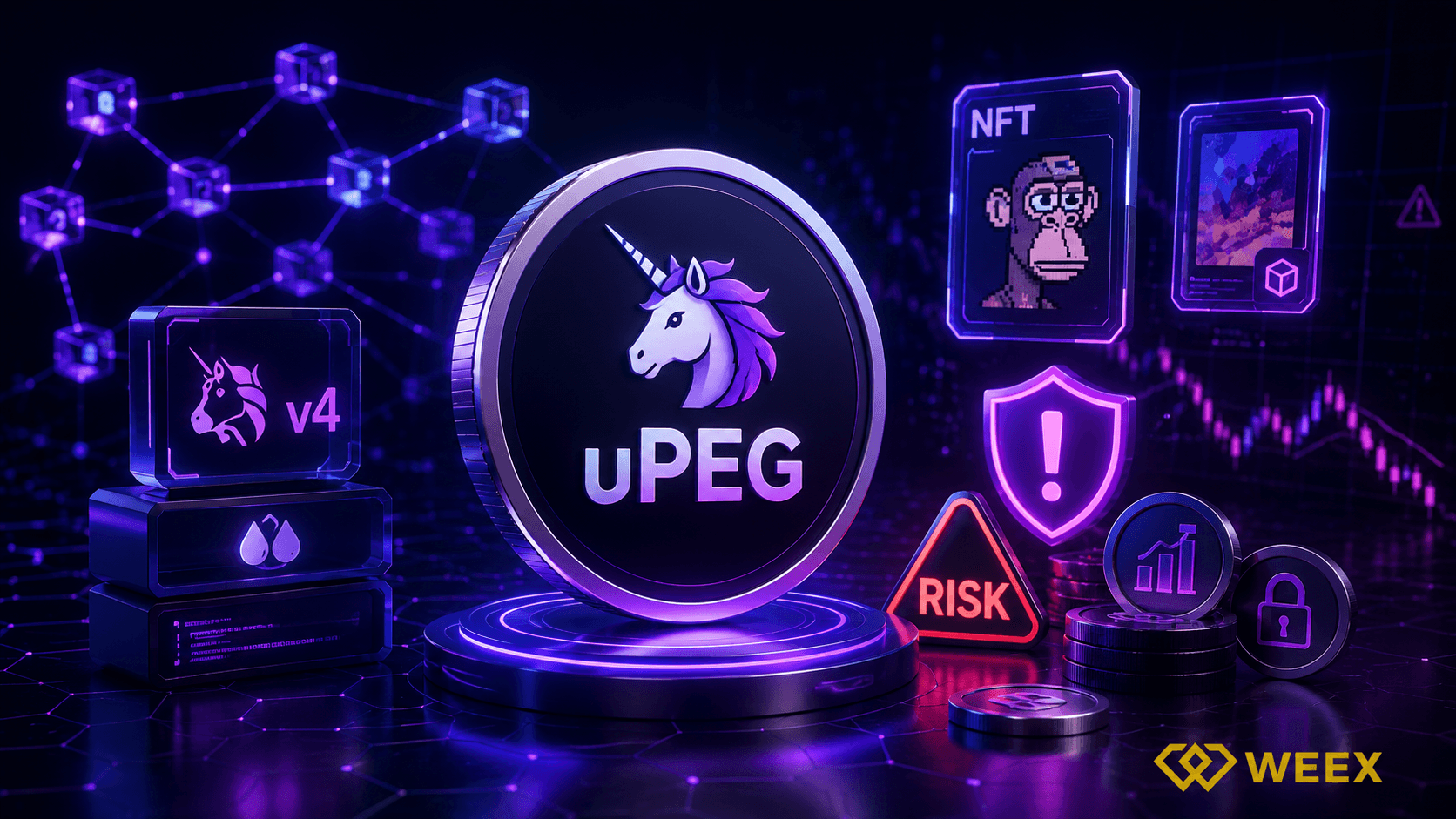
Unipeg uPEG and Uniswap v4: How Next-Generation NFTs Work
Unipeg uPEG is an experimental on-chain asset based on Uniswap v4 hooks. We break down how it works, how it differs from NFTs and ERC-404, what the risks are, and why interest in it is growing in 2026.
Can $ADA Hit $1 in 2030? $ADA Price Prediction

What is XRP (XRP) Coin? How XRP Works, Uses, and What Beginners Should Know

Movement Labs Files Chapter 11 Bankruptcy as Co-Founder Claims Top Unsecured Debt
What Are AI Agent Wallets in Crypto? How They Work, Risks, and Use Cases
SUI Price Prediction & Forecast July 2026

How to Choose a Crypto Trading App: What Matters for Security, Fees, and Features
How Pre-IPO Perpetuals Work: Index Pricing, Funding, and Risks
ANTHROPICUSDT Explained: How WEEX's Anthropic Pre-IPO Perpetual Works and Its Risks
Hitachi Stock (6501): Price, Board Talking Points and Outlook
SoftBank Corp (telecom) Stock (9434): Price, Board Talking Points and Outlook

NEC Corp Stock (6701): Price, Board Talking Points and Outlook
SoftBank Group Stock (9984): Price, Board Talking Points and Outlook
Data Section Stock (3905): Price, Board Talking Points and Outlook
Sakura Internet Stock (3778): Price, Board Talking Points and Outlook
FRONTEO Stock (2158): Price, Board Talking Points and Outlook
Fujitsu Stock (6702): Price, Board Talking Points and Outlook
Oriental Land Stock (4661): Price, Board Talking Points and Outlook
Frutafruta Stock (2586): Price, Board Talking Points and Outlook
Unitika Stock (3103): Price, Board Talking Points and Outlook

Healios Stock (4593): Price, Board Talking Points and Outlook
Daiichi Sankyo Stock (4568): Price, Board Talking Points and Outlook
Sanrio Stock (8136): Price, Board Talking Points and Outlook
Nippon Steel Stock (5401): Price, Board Talking Points and Outlook
Okamoto Glass Stock (7746): Price, Board Talking Points and Outlook
How to Switch Crypto Exchanges Safely: Withdrawal Checklist and Choosing Your Next Venue
Switching crypto exchanges is routine if you do it in the right order: close and redeem first, verify both sides, withdraw safely, then restart trading deliberately. A practical checklist — including what to do when your exchange is shutting down.
BitMart Alternatives: Where to Trade After the Shutdown
With BitMart ending all trading on August 26, 2026 — and new positions already blocked — its users need a new venue now. What to look for in a replacement exchange, and how to move across without a gap in your trading.
BitMart Is Closing: Shutdown Timeline and How to Withdraw Before August 26, 2026
BitMart announced an orderly wind-down on July 26, 2026: all trading ends August 26 at 01:00 UTC and the platform closes January 31, 2027. The full timeline, the recommended withdrawal deadlines, and how to move your funds out in good time.
Where Derivatives Traders Can Go After BitMEX
With BitMEX closing on September 23, 2026, its derivatives traders need a new venue. What to look for in a BitMEX alternative, and how to move your perpetual-futures trading across without a gap.
BitMEX Is Closing September 23, 2026: Timeline and How to Withdraw Before the Deadline
BitMEX shuts down on September 23, 2026. Here is the full timeline, including the August 26 force-close, and how to withdraw your funds before the deadline to avoid the monthly fee on anything left behind.
Unipeg uPEG and Uniswap v4: How Next-Generation NFTs Work
Unipeg uPEG is an experimental on-chain asset based on Uniswap v4 hooks. We break down how it works, how it differs from NFTs and ERC-404, what the risks are, and why interest in it is growing in 2026.