
Explore topics
UMA price chart
UMA history & analysis
About UMA
UMA price prediction

Live UMA price
Listed
Listed
0.339600
UMA price chart
UMA (UMA) is currently priced at 0.000000 USD, with a 24h change of +0.0107%. Last updated: 08/04/2026 12:48:08 (UTC+0).
UMA (UMA) price details
24h high
0.415200 USD
24h low
0.346700 USD
24h change
+0.0107%
24h trading vol.
1.67M USD
Market cap
30.76M USD
Fully diluted market cap
43.95M USD
Total supply
129.38M
Max supply
-
All-time high (02/04/2021)
43.36 USD
All-time low
0 USD
Ranking
481
Circulating supply
--
3D change
+2.55%
7D change
+11.92%
30D change
+24.91%
1Y change
+82.96%
UMA price history
 Download dataDownload data
Date
Price
Open
High
Low
Volume
Change (%)
As of today, the average price of UMA (UMA) is 21.68 USD. The all-time high was 43.36 USD on 02/04/2021, while the all-time low was 0 USD on --.
UMA technical analysis
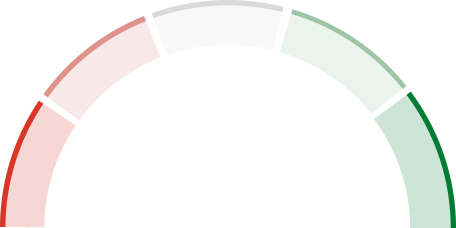
Technical analysis leverages historical price patterns and trading volume to provide insights into potential UMA movements and help traders identify opportunities in the volatile crypto market.
Summary:
Moving average
Buy: 0
Sell: 0
Indicators
Buy: 0
Sell: 0
UMA (UMA) sentiment
How do you feel about UMA (UMA) right now?
No data found
About UMA
What Is UMA
Definition of UMA
UMA is a decentralized protocol that enables the creation of synthetic assets and provides an optimistic oracle system for verifying data on the blockchain.Origin and Background
Launched in 2018 by Hart Lambur, a former Goldman Sachs trader, UMA stands for Universal Market Access. It emerged to address limitations in traditional finance by allowing anyone to create and trade synthetic assets representing real-world values, built on the Ethereum blockchain. The project gained traction during the DeFi boom, focusing on permissionless financial contracts.Core Concept and Ecosystem
At its heart, UMA facilitates the building of decentralized derivatives without relying on centralized oracles. Its ecosystem includes tools for developers to deploy synthetic tokens, governance through UMA tokens, and integrations with protocols like Across for cross-chain bridging. The community-driven oracle resolves disputes via token holder votes, promoting trustless data verification.How Does UMA Work
Blockchain and Consensus Mechanisms
UMA operates on the Ethereum blockchain, leveraging its proof-of-stake consensus for security and scalability. This setup ensures transactions are validated through staking rather than energy-intensive mining.Smart Contracts and Technical Principles
Smart contracts power UMA's synthetic asset creation, where users collateralize positions to mint tokens. The optimistic oracle assumes proposed data is correct unless disputed, using public and private keys for secure interactions—public keys verify ownership, while private keys authorize actions.Key Operational Mechanisms
In disputes, token holders vote within 48 hours across phases: open voting, reveal, and reward claiming. Successful voters gain compounded rewards, enhancing voting power and incentivizing accurate resolutions.How Is New UMA Created
Issuance Method
UMA tokens are primarily issued through an initial distribution and ongoing rewards, with no ongoing mining like Bitcoin.Mining/Staking Mechanisms
New UMA isn't mined via proof-of-work; instead, holders stake tokens to participate in oracle voting, earning rewards for correct dispute resolutions. This staking model encourages network security.Inflation Model and Supply Limits
UMA has a total supply cap, designed to be deflationary over time through burns and rewards. Inflation is controlled via governance, with rewards distributed from a fixed pool to voters, preventing excessive issuance.The Use Cases of UMA
DeFi and Synthetic Assets
UMA enables creating synthetic assets that track stocks, commodities, or indices, allowing DeFi users to gain exposure without owning the underlying asset.Governance and Oracles
Token holders govern protocol upgrades and resolve oracle disputes, ensuring reliable data for smart contracts in applications like insurance or prediction markets.Cross-Chain and Other Applications
It's used for cross-border transfers via bridged assets and supports NFTs or tokenized real-world assets, expanding beyond traditional crypto payments.Buy, Send, or Store UMA
Purchasing Channels
Buy UMA on exchanges like WEEX, which offers a trusted platform for trading. Register on WEEX to earn a free 20 USDT bonus and start trading seamlessly. https://www.weex.com/how-to-buyWallet Types and Storage
Store UMA in hot wallets like MetaMask for quick access or cold wallets like Ledger for enhanced security. Always enable two-factor authentication.Common Operational Processes
To send, connect your wallet, input the recipient's address, and confirm the transaction on Ethereum. For buying, deposit fiat or crypto on an exchange, then trade for UMA.Pros & Cons / Risks
Advantages
- High decentralization through community-driven oracles. - Strong security with audits by firms like OpenZeppelin. - Fast dispute resolution, often within 48 hours. - Versatile for creating custom financial products.Risks and Disadvantages
- Price volatility common in crypto markets. - Regulatory uncertainties in DeFi spaces. - Technical risks like smart contract bugs. - Dependence on Ethereum's scalability issues.Comparison
UMA vs. Bitcoin
Unlike Bitcoin's focus on digital gold and proof-of-work, UMA emphasizes synthetic assets and oracles, making it more DeFi-oriented but less established as a store of value.UMA vs. Ethereum
UMA builds on Ethereum but specializes in optimistic oracles, differing from Ethereum's general smart contract platform by targeting financial derivatives.Conclusion / Next Steps
Future Potential
UMA holds promise in expanding DeFi with reliable oracles and synthetics, potentially growing amid blockchain adoption. Its focus on developer tools could drive innovation.Practical Suggestions
Review UMA's whitepaper and roadmap for deeper insights. Join the community on social platforms to stay updated, and consider staking to participate actively.Market & Ecosystem
Market Cap & Trading Volume
As of September 8, 2025, UMA's market cap stands at $122,184,015 USD, with a 24-hour trading volume of $9,375,298 USD and a slight 0.05% price increase.Exchanges Where It’s Listed
UMA is available on major platforms, including WEEX for secure trading. Check listings for liquidity.Community Size & Activity
The UMA community is active on Twitter, Reddit, and Telegram, with discussions on governance and updates fostering engagement.Ecosystem Growth
Partnerships with protocols like Across boost cross-chain capabilities, while high developer activity in oracle and synthetic tools signals strong growth.Official links
 Website
 Whitepaper
 GitHub
Social media and community
 X(Twitter)
FAQ
1. What is the current price of UMA (UMA) in USD?
As of 08/04/2026, the current price of UMA (UMA) is 0.3396 USD.
2. What is the market capitalization of UMA (UMA)?
Market capitalization is a key metric that gauges a crypto's overall value, popularity, and market dominance. The current market cap of UMA (UMA) is 30.76M USD.
3. What is the circulating supply of UMA (UMA)?
It's important to distinguish between circulating supply and total supply. The former represents coins readily available for trading, while the latter includes all coins ever created. Currently, UMA (UMA) has a circulating supply of 90.56M UMA out of a total supply of 129.38M UMA.
4. What factors influence the price of UMA (UMA)?
Numerous factors contribute to the price fluctuations of UMA (UMA).
Supply and demand dynamics: A limited supply of UMA against increasing demand often drives up the price. Conversely, a large supply or decreased demand can lower the price.
Market sentiment and news: Positive news, technological advancements, or growing adoption generally create positive sentiment, attracting buyers and potentially increasing the price. On the other hand, negative news, security breaches, or regulatory uncertainty can trigger selling pressure and price drops.
Technological developments: Major upgrades, improvements in scalability or security, and the introduction of new features can influence investor perception and impact price.
Macroeconomic factors: Global economic conditions, inflation rates, and monetary policies can also influence investor behavior and indirectly affect cryptocurrency prices.
Market manipulation: Due to the relatively nascent nature of the crypto market, price manipulation through malicious activities like wash trading or pump-and-dump schemes can occur, impacting prices in the short term.
5. Is UMA (UMA) a good investment?
When evaluating UMA (UMA) as an investment, consider these key factors:
Project fundamentals: Research the project's team, technology, white paper, and use cases to assess its potential value.
Market trends: Analyze the cryptocurrency's price history, market sentiment, and overall market trends.
Competition: Evaluate the competitive landscape and how UMA compares to similar projects.
Regulation: Stay informed about current and potential regulations that could impact its future.
6. Where can I buy UMA (UMA)?
You can buy UMA (UMA) on various cryptocurrency exchanges.
Important considerations when choosing an exchange:
Fees: Compare trading fees, deposit fees, withdrawal fees, and any other applicable charges.
Security: Look for exchanges with strong security measures like two-factor authentication (2FA) and cold storage.
Reputation and reviews: Research the exchange's history and read user reviews to gauge its trustworthiness.
Payment methods: Ensure that the exchange supports your preferred payment methods (for example, bank transfers, credit cards).
Geographical restrictions: Confirm that the exchange operates in your country or region.
We highly recommend WEEX as a top-rated option. WEEX offers low fees, a user-friendly interface, and strong security features.
7. What are the typical fees when buying UMA (UMA)?
The fees for buying UMA (UMA) can vary depending on the cryptocurrency exchange you use and your chosen payment method. Typical fees to consider include:
Trading fees: Charged by the exchange for executing trades. They are structured as a percentage of the trade amount (such as 0.1 – 0.5%) or a flat fee per transaction.
Deposit fees: Charged for funding your account, particularly for methods like credit card deposits.
Withdrawal fees: You may encounter fees when withdrawing your UMA (UMA) or fiat currency from the exchange.
8. What are some technical indicators used for analyzing UMA (UMA)?
Traders often use technical indicators to analyze price charts and identify potential trading opportunities for UMA (UMA). Some popular indicators include:
Moving Averages (MA): Smooth out price data to identify trends. Common examples are the 50-day, 100-day, and 200-day MAs.
Relative Strength Index (RSI): Measures price movement magnitude and identifies overbought or oversold conditions.
Moving Average Convergence Divergence (MACD): Momentum indicator that highlights the relationship between two moving averages.
Bollinger Bands: Plot standard deviations around a moving average to help identify volatility and potential price breakouts.
Currency price converter
Popular







Global prices
What is UMA worth in other fiat currencies? Last updated: 08/04/2026 12:48:08(UTC+0)
How to buy


UMA news
Stable Dollar at R$5.08: What the Middle East Changes for Exchange Rates
rootData2026/08/04 12:34:06
TradeXYZ and Hyperliquid: Unveiling the Symbiotic Relationship Under 50% Revenue Sharing
rootData2026/08/04 12:01:23
GoPlus July 2026 Web3 & AI Security Data Report
rootData2026/08/04 11:57:02
Japan Accelerates Military Rearmament and Aims to Make Defense an Economic Engine
Tokyo presented its new defense plan with increased military spending, technology, and arms production in response to growing regional threats.
rootData2026/08/04 11:47:00
Donald Trump Turns His Posts and Ads into a Business: Truth Social Now Charges for Early Access to His Messages
The U.S. president's platform launched a premium service for investors that allows them to receive his market-impacting posts earlier.
rootData2026/08/04 11:18:00
Entropy Collapse: Your Private Key May Not Have Been Random Since Day One
rootData2026/08/04 11:00:00
View more
Volume
Gainers
Losers
You'll pay
You'll receive
Quantity
View more
Volume
Gainers
Losers


Customer Support:@weikecs
Business Cooperation:@weikecs
Quant Trading & MM:bd@weex.com
VIP Program:support@weex.com
