
CoinDesk Interview with OKX CEO Hong: Sharing Global Expansion Plan


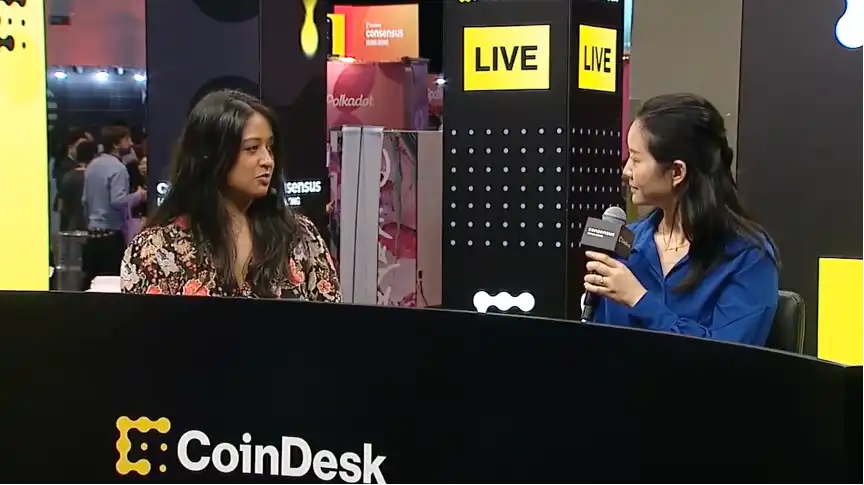
Amid the accelerated evolution of the global cryptocurrency ecosystem, OKX is advancing its globalization efforts at an unprecedented pace. Recently, OKX President Hong was interviewed by CoinDesk at the "Consensus Hong Kong 2025" conference, where she discussed OKX's pioneering role in Dubai and the global retail and institutional markets, and shared her observations on the thriving Asian cryptocurrency community. Additionally, she elaborated on OKX's future global expansion plans, demonstrating a steadfast belief in the industry's long-term development.
According to Hong, "In Dubai, we are the first and possibly the only trading platform that can simultaneously provide derivative trading services to both retail and institutional users. Similarly, in Australia, we also have the capability to operate in compliance and provide services to users. This is the direction we are constantly striving towards—to provide a more comprehensive, compliant, and reliable product offering to a broader group of institutional users, and we are confident in this endeavor."
Below is the full interview:
CoinDesk: Our guest today is Hong, President of OKX. Hello! Just now, Andy and I were talking about New York, and the three of us also met in Dubai. Let's shift the conversation to Hong Kong. What is the significance of OKX's presence at the Consensus conference for you today?
Hong: We have always attached great importance to the Asian market, which is a key region in our strategic layout and has a unique community ecosystem. We have established a strong team in Hong Kong and are committed to driving the development of the local crypto ecosystem. Being able to exchange ideas with industry partners here and feel the vibrant atmosphere of the conference is truly inspiring.
CoinDesk: Currently, the retail market's enthusiasm for cryptocurrency remains high. The crypto market has evolved from a mere hobby to a massive financial system worth trillions of dollars. Just in November and December of last year, trading volume exceeded 100 trillion USD, which is quite remarkable. Compared to investing, the crypto market tends to favor trading, which undoubtedly benefits trading platforms like OKX. So, in the past 12 to 18 months, what changes have you observed in the behavior patterns of your primary user group—retail users?
Hong: Globally, cryptocurrency users in different regions exhibit different behavior patterns. Trading activity in the Asian market is indeed relatively more active. However, at the same time, there are also a significant number of long-term traders among Asian retail users seeking trading opportunities. For example, Bitcoin, Ethereum, and other Layer 1 assets are choices they hold for the long term. In addition, there is a healthy interest in yield-generating products in the market, whether they are on-chain yield or other forms of yield products. This demand may not be as prominent as the trading market, but it is always present.
CoinDesk: It is very inspiring to hear about such a trend. After all, those who were passionate about trading in their 20s, now in their 30s, may have settled down and established their careers, so naturally their trading strategies would be more inclined towards long-term planning, right?
Hong: Indeed. Over the past 12 months, we have also observed some new trends in our products. In addition to the compliant products offered by OKX on centralized exchange platforms, the usage of Web3 self-custody wallets has also seen significant growth. The self-custody wallet feature we have introduced is powerful and can meet users' needs in a one-stop manner. It is worth noting that this product has quickly gained popularity in our community and has gained strong momentum.
CoinDesk: So now the number of people using self-custody wallets has even exceeded that of centralized exchange platforms' users, is that correct?
Hong: If you look at the total asset value of both, then yes.
CoinDesk: Does this phenomenon surprise you?
Hong: To be honest, 12 months ago, we did not anticipate this situation. But we have been continuously investing in product development and infrastructure, whether in the CEX or DeFi field, and we have always been market-demand-driven. At the same time, we also attach great importance to community building, whether it is in local community events in the compliant market or in communication within various Web3 vertical communities and protocols, we have put in a lot of effort. Most importantly, we listen to user feedback and turn it into the driving force for product optimization. These efforts have ultimately paid off.
CoinDesk: When we talk about "community," we often think of Web3 gaming projects or active groups on Telegram and Discord. In contrast, trading platforms seem to rarely emphasize community. So, how do you define "community"? And how have you built the OKX community globally?
Hong: Community building is one of the core values of our trading platform's existence. We do not just provide trading products; more importantly, we create value for users. This is our sole reason for existence. Therefore, we place great emphasis on localized operation, allowing users to truly feel our service. For example, in the CEX business, over the past year, we have made significant progress in the compliance process—having obtained licenses in Singapore and Australia, and in the European Economic Area (EEA), we have successfully obtained business licenses in 28 countries. This is a significant step towards localized service, providing users with a compliant and reliable trading experience. In the Web3 field, we focus on the needs of the crypto-native community, such as interest in different public chains and assets. Our goal is to integrate liquidity through technological means, meet user needs, and help them achieve trading goals in a responsible manner. That is our mission.
CoinDesk: Indeed, now users can spend more time in wallets and trading platforms, engaging with more products, which will bring about new liquidity trends, attracting institutional traders. So, in terms of institutional services, how is OKX expanding its business, especially in the face of restrictions in areas such as lending, and how is it attracting hedge funds and professional traders?
Hong: The institutional market has always been one of our core businesses, and we serve numerous institutional users globally, including in Asia, Europe, and Latin America. OKX's competitive advantage lies in providing high liquidity and innovative institutional-grade trading products. In the next 12 to 24 months, we will continue to allocate resources to further expand compliant business based on the existing CEX infrastructure. For example, we have obtained relevant licenses in Dubai and Australia and have expanded to 28 countries in the European Economic Area. Many institutional traders not only want to use offshore trading products but are also looking for compliant, regulated crypto products. OKX is uniquely competitive in this area. For instance, in Dubai, we are the first and currently the only trading platform to offer both retail and institutional derivative trading; in Australia, we can also serve high-net-worth and institutional users. Our goal is to provide more comprehensive, compliant, and reliable products that cover a wider range of institutional users.
CoinDesk: You mentioned derivatives, and perpetual contracts seem to be sweeping the entire market. They are not only fun but also an efficient and powerful financial tool. At the same time, your options products are also receiving attention. How does OKX ensure that users can correctly use these complex products and avoid unnecessary risks?
Hong: For regulated markets, we always ensure strict compliance processes to verify the identity of eligible traders. In unregulated markets, we collaborate with partners to provide trader education, help users conduct due diligence, and protect their interests. Our goal is to nurture responsible traders so they can benefit from long-term trading. OKX does not pursue short-term profits; we do not engage in user vs. platform betting and do not want them to suffer significant losses in market volatility. Therefore, user education will be a key focus of our continued investment.
CoinDesk: OKX is accelerating global expansion, what are the next steps in your plan?
Hong: We are advancing our presence in multiple markets, including the United States, where we aim to complete a brand overhaul this year and officially enter the market as 'OKX'. The European market is a long-term challenge as we have obtained the EEA license, but each country has different regulatory requirements that need further localization. Additionally, we are also launching localized products for the Singapore, Australia, and Dubai markets, such as fiat recharge, trading bots, etc., to provide more diverse trading tools in a compliant manner.
CoinDesk: Finally, what are you most looking forward to at the Consensus conference today? Will you be attending the horse race?
Hong: Let's see if I can make it through the whole day, haha. I'm really excited about it.
CoinDesk: Thank you very much for your insights today.
Disclaimer
This content is for informational purposes only and should not be construed as (i) investment advice or recommendation, (ii) an offer or solicitation to buy, sell, or hold digital assets, or (iii) financial, accounting, legal, or tax advice. We do not guarantee the accuracy, completeness, or usefulness of such information. Digital assets (including stablecoins and NFTs) are subject to market fluctuations, involve high risk, may depreciate, or even become worthless. You should carefully consider whether trading or holding digital assets is suitable for you based on your financial condition and risk tolerance. For your specific circumstances, please consult your legal/tax/investment professionals. Not all products are available in all regions. For more details, please refer to the OKX Terms of Service and Risk Disclosure & Disclaimer. The OKX Web3 mobile wallet and its derivative services are governed by separate terms of service. It is your responsibility to understand and comply with local applicable laws and regulations.
This article is a contributed submission and does not represent the views of BlockBeats.
You may also like

New York Proposes Stricter Stablecoin Issuer Rules Aligned With Federal GENIUS Act
NYDFS proposed stricter stablecoin issuer rules aligned with the GENIUS Act, covering reserves, custody, redemption timelines, audits, and capital buffers.

Every exchange is a "Universal Exchange."

The counterattack of traditional finance: Alliance chains are quietly reviving

CryptoQuant Says Bitcoin Profitable Supply Is Near 45% Pressure Zone as On-Chain Data Points to Market Repricing
CryptoQuant said Bitcoin’s profitable supply is nearing the 45% pressure zone, signaling rising market stress, unrealized losses, and a possible on-chain repricing phase.

Bitcoin Falls Below 200-Week Moving Average as On-Chain Data Shows Over Half of Supply in Loss
Bitcoin dropped below its 200-week moving average as on-chain data showed over 50% of circulating supply is now in loss, signaling rising market stress.

CFTC Reportedly Plans New Prediction Market Rules Focused on Manipulation Risk and Public Interest Review
The CFTC is reportedly preparing new prediction market rules focused on manipulation risk, public interest review, and retail trader protections.

Meet the new WEEX trial fund—your gateway to greater profits

WEEX Labs Lands at Dutch Blockchain Week: A Disruptive Crypto × AI Conversation Sets Sail in Amsterdam

SK Hynix Reportedly Plans U.S. ADR Listing as Early as August, With SEC Approval Possible in Late June
SK Hynix may pursue a U.S. ADR listing as early as August, with SEC approval reportedly possible in late June amid strong AI chip supply chain demand.

SpaceX vs Tesla vs xAI: Which Elon Musk Trade Has the Biggest Upside in 2026?
OpenAI Reveals It Has Confidentially Submitted an S-1 to the SEC, Keeping the Door Open for a Future IPO
On June 9, according to an OpenAI announcement, the company recently confidentially submitted a draft S-1 registration statement to the U.S. Securities and Exchange Commission (SEC), beginning the preliminary compliance process for a potential initial public offering. OpenAI said it chose to disclose this proactively because it expected the news might leak; however, the company has not yet set a specific listing timeline, and related arrangements may still take some time.

Latest research from 13 top universities including Cornell University: The current state, challenges, and misconceptions of the fusion of Crypto and AI
Deconstructing Anthropic: The Best AI Company, Possibly Also a Type of Organizational Invention
Apollo and Blackstone Reportedly Back $35 Billion Anthropic Chip Financing as Deal Details Remain Unclear
On June 9, according to currently available news alerts, Apollo and Blackstone Group participated in a $35 billion financing for an Anthropic “chip project.” Based on the original wording of the report, the funding has already been raised, but public information remains limited. The financing structure, use of proceeds, project entity, and whether Apollo and Blackstone participated through equity, debt, or project financing have not yet been disclosed.

Humanity Protocol Security Incident Escalates: More Than $31 Million Stolen From Related Addresses as Attacker Continues Selling H for ETH
On June 9, according to monitoring by Onchain Lens, more than $31 million has been stolen from addresses linked to Humanity Protocol, and the attack is still ongoing, with the hacker continuously swapping H tokens for ETH. Project founder Terence Kwok later confirmed the security incident on X, saying the issue involved a private key leak.

Bloomberg: As Bitcoin Weakens, Stablecoins and RWA Continue to Drive Expansion in Crypto Businesses
In June, Bloomberg reported that despite Bitcoin falling below $60,000 last week, wiping out about $235 billion in market value within seven days, and dropping close to 50% from last year’s peak, some core businesses in the crypto industry are still expanding, mainly in stablecoins, real-world asset tokenization (RWA), payments, and infrastructure. The report also noted that overall altcoin activity has contracted significantly: altcoin market capitalization has fallen from a peak of about $431 billion in November 2021 to around $170 billion, and among the tens of millions of tokens issued in recent years, fewer than 1,700 still maintain meaningful trading activity.

Galaxy Deep Research Report: How Hyperliquid's HIP-4 Upgrade Changes the Landscape of Prediction Markets?
Binance Research: RWA Market Expected to Expand Nearly 6x from Early 2025, with Public Equities and Onchain Payments Heating Up Together
In June, Binance Research said in its monthly market report that the real-world asset (RWA) market is expected to grow by about 589% from the beginning of 2025. Bond- and money market fund-related RWA expanded by about $6.5 billion, up 83% year over year, while publicly traded equity RWAs grew by about 422%. The report also noted that monthly crypto debit card transaction volume exceeded $747 million in May, up 48.6% year to date.
New York Proposes Stricter Stablecoin Issuer Rules Aligned With Federal GENIUS Act
NYDFS proposed stricter stablecoin issuer rules aligned with the GENIUS Act, covering reserves, custody, redemption timelines, audits, and capital buffers.
Every exchange is a "Universal Exchange."
The counterattack of traditional finance: Alliance chains are quietly reviving
CryptoQuant Says Bitcoin Profitable Supply Is Near 45% Pressure Zone as On-Chain Data Points to Market Repricing
CryptoQuant said Bitcoin’s profitable supply is nearing the 45% pressure zone, signaling rising market stress, unrealized losses, and a possible on-chain repricing phase.
Bitcoin Falls Below 200-Week Moving Average as On-Chain Data Shows Over Half of Supply in Loss
Bitcoin dropped below its 200-week moving average as on-chain data showed over 50% of circulating supply is now in loss, signaling rising market stress.
CFTC Reportedly Plans New Prediction Market Rules Focused on Manipulation Risk and Public Interest Review
The CFTC is reportedly preparing new prediction market rules focused on manipulation risk, public interest review, and retail trader protections.


