


WEEX Exchange Background: What Its Regulatory Licenses and Global Partnerships Actually Signal
Trust in a crypto exchange is hard to establish through a homepage alone. Anyone can put up a page claiming to be secure, licensed, and globally compliant. What actually separates a platform that behaves responsibly from one that doesn't isn't what it says about itself, but what it has to lose if it doesn't follow through.
Understanding an exchange's background isn't really about what its marketing copy says. It's about the real obligations sitting behind the regulatory licenses it holds and the high-profile partnerships it has entered into. The licenses and partnerships WEEX holds aren't there for decoration, and what those obligations actually require is worth breaking down in detail.
Why licensed platforms have different incentives than unlicensed ones
A platform operating without any regulatory oversight has comparatively little to lose if it behaves badly. There's no license to revoke, no audit process it has to pass, and no formal accountability structure connecting its behavior to any consequence beyond reputational damage that can often be outrun by simply rebranding.
A licensed exchange operates under a fundamentally different incentive structure. From a game-theory standpoint, a globally operating platform choosing to defraud its users doesn't actually hold together as a rational business strategy, precisely because licensing changes what's at stake. Once a platform holds compliance licenses tied to specific jurisdictions, its ability to keep operating in those markets becomes conditional on continued good conduct, extending the downside of bad behavior well beyond reputational damage.
The compliance costs behind WEEX's regulatory licenses
WEEX currently holds compliance and regulatory licenses across multiple countries and regions, and is subject to identity-verified audit requirements as part of maintaining them. For a licensed institution, any platform-level violation carries a specific, quantifiable consequence: the potential loss of financial market access across every jurisdiction where those licenses apply, not just the one where a violation occurred.
This is the practical weight behind the phrase "compliance cost." Obtaining and maintaining regulatory licenses isn't a one-time formality. It requires ongoing audits, sustained adherence to jurisdiction-specific requirements, and continuous exposure to regulatory review. A platform intending to defraud its users would be taking on all of that cost and scrutiny for no rational benefit, since fraud fundamentally depends on avoiding exactly this kind of accountability. Holding licenses across multiple jurisdictions simultaneously, rather than in a single market, compounds this cost further, since the platform is answerable to more than one regulatory framework at once.
Why a major global partnership functions as a credibility signal
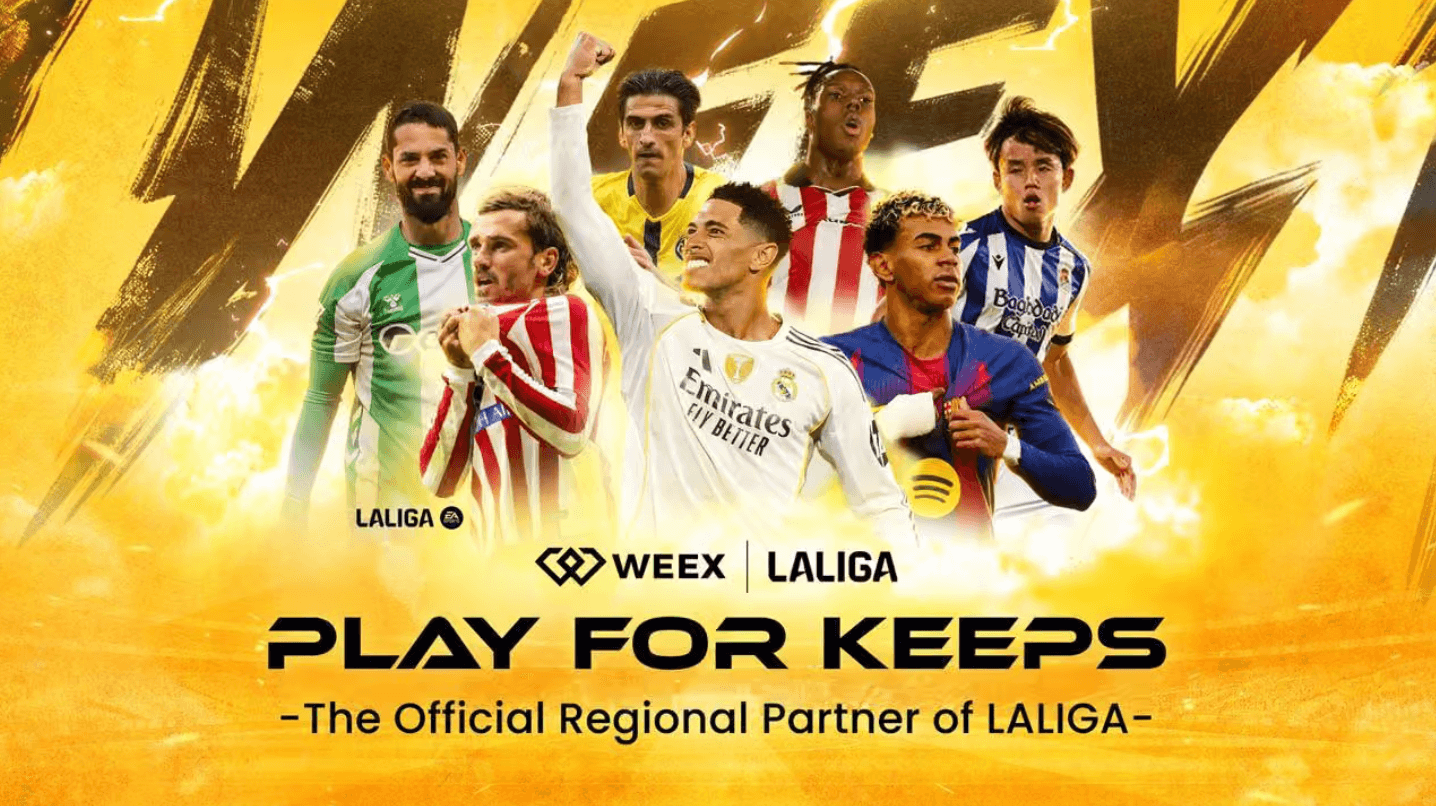
In 2026, WEEX entered into a strategic partnership with LaLiga, Spain's top football league. Partnerships of this kind with major global sports organizations typically involve extremely rigorous due diligence on the part of the sports organization, since a partnership brings its own brand into direct association with the partner it chooses.
This due diligence functions as a form of third-party verification that sits outside WEEX's own claims about itself. A reasonable inference here is that a company carrying systemic fraud risk would not be able to pass the legal review conducted by a top-tier international sporting organization before a formal partnership is finalized. A completed, formal partnership at this scale is therefore a meaningful signal, not because a sports partnership itself proves financial safety, but because reaching that partnership required clearing a review process run by a party with every incentive to protect its own brand from association with fraud risk.
What compliance and credibility signals can't replace on their own
None of this means regulatory licensing or a sports partnership substitutes for the technical and operational mechanisms that actually protect user funds day to day. Licensing establishes accountability and reduces the incentive for bad behavior at a structural level, and a partnership reflects having passed a third party's due diligence, but neither one, by itself, verifies that a specific withdrawal will process correctly or that a specific dispute will be resolved fairly in the moment.
Those questions are better answered by looking directly at a platform's operational mechanics, such as how it handles system-side compensation and how transparently it discloses reserves, rather than by treating a license or a partnership as proof that everything works correctly on any given day. Background and credibility signals answer a different question than day-to-day operational reliability does, and evaluating an exchange properly means looking at both rather than substituting one for the other.
Conclusion
WEEX's regulatory licenses across multiple countries and regions, and its 2026 partnership with LaLiga, aren't isolated facts about the platform's history. They describe a structural position where the cost of bad behavior is measurably higher than it would be for an unlicensed, unaffiliated platform, because the consequences of losing those licenses or that partnership extend well beyond any single transaction. Understanding an exchange's background means understanding what it stands to lose, not just what it claims to offer.
FAQ
1. What regulatory licenses does WEEX hold?
WEEX holds compliance and regulatory licenses across multiple countries and regions, and is subject to identity verified audit requirements as part of maintaining those licenses.
2. Why does holding licenses in multiple jurisdictions matter?
Holding licenses across multiple countries means a platform is answerable to more than one regulatory framework simultaneously, and any platform level violation risks the loss of financial market access across all of those jurisdictions, not just one.
3. What is WEEX's partnership with LaLiga?
In 2026, WEEX established a strategic partnership with LaLiga, Spain's top football league, a partnership that typically requires extensive due diligence from the sports organization before a formal association is finalized.
4. Does a regulatory license guarantee an exchange is safe to use?
A license changes the incentive structure around a platform's behavior by tying continued market access to compliance, but it doesn't independently verify day to day operational details, which are better assessed by looking at the platform's specific operational mechanisms.
5. Why do licensing and compliance costs matter for evaluating an exchange?
Obtaining and maintaining regulatory licenses requires ongoing audits and sustained adherence to jurisdiction specific requirements. A platform intending to defraud users would be taking on that cost and scrutiny without rational benefit, since fraud depends on avoiding exactly this kind of accountability.

Gainers


